I am 33 years old and have known I’ve been infertile since I got married just over 6 years ago. There’s sort of a spectrum of infertility because you’re always waiting for that special month when pregnancy will happen. For some it does and for others it doesn’t. The realization that my situation is becoming permanent has re-ignited some emotions I had conquered years ago after the initial realization that it would not be easy to become pregnant.
I was finally diagnosed with severe stage 4 endometriosis at 25 years old after 12 years of physical pain. If you’re thinking that is too long to wait before getting a diagnosis and subsequent treatment, you are right. So for the first several years of this journey, I was almost daily confronted with the painful realization that multiple doctors had failed me- both internists and gynecologists. Their medical school failed me. Their cheap attempt at a solution -insert any type of birth control here- failed me.
NFP/Fertility Awareness is God’s design for women’s health
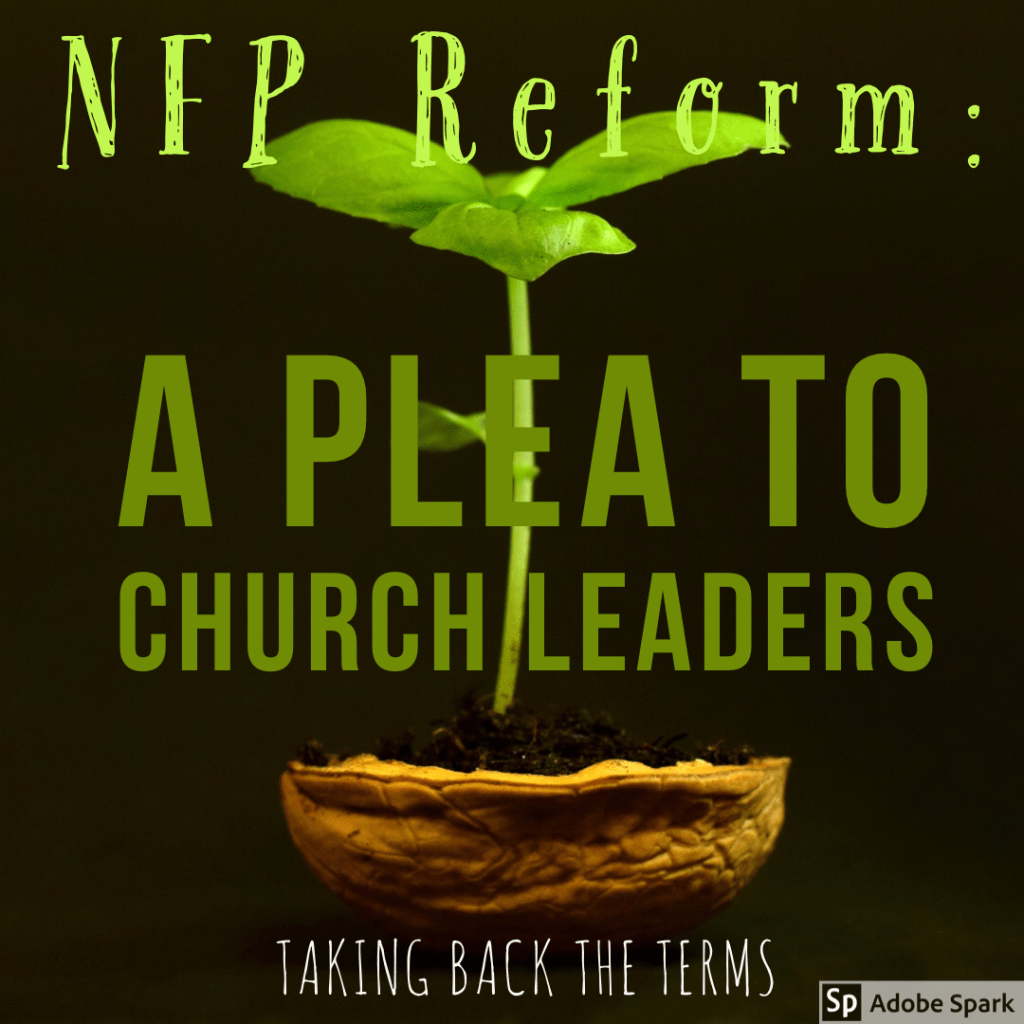
Women’s health problems are more widespread than most realize – even with many who consider themselves of normal health. Thankfully, God has gifted humanity with an actual scientific and medically sound solution, and He has given it to us through the Catholic Church. Let that resonate for a moment because it’s kind of a big deal- and it supports the frequently challenged idea that Christ cares for His suffering people. The only problem is that many priests, religious, and Catholic professionals are completely unaware that it exists or don’t fully understand the impact it can have on a woman (at any reproductive age) and/or a couple’s life.
I have wrestled with my faith in God and it has been strengthened. Christ has not failed me. I write this today because now I am entering into another painful realization. Despite my life-long (practicing) Catholicism and the Creighton Model and Naprotechnology’s deep roots in the Catholic faith since the late 1960s (although anyone will benefit, regardless of denomination or lack thereof), not one priest, religious, or Catholic professional gave me information about this credible solution in an effort to heal my physical and emotional pain and preserve my fertility throughout the 12 years that I desperately needed it.
Had I known about this charting method, I would’ve been diagnosed and treated within the same year of discovering my severe symptoms as a young teenager. And I may not be infertile today. But the only information I received wasn’t given to me until I was in my 20s and preparing for marriage- to avoid IVF and some ambiguity about whether or not it was morally permissible to use birth control for medical reasons after I was married.
It’s not your fault
You are not responsible for my infertility. You can only share what you know of and I am aware that this was not explained to you in detail in seminary. I could not and would not blame you. But I hope I will challenge and motivate you. There are 1 in 8 couples who are infertile and many don’t know it yet. Infertility is a symptom of an underlying problem that needs to be addressed sooner rather than later. Another problem sometimes preventable with NaPro protocols could be miscarriage. Post-partum depression is also widespread and has an effective but rarely known treatment. Countless women experience other women’s health problems- some are aware and some aren’t.
NFP can be the answer for many of these women. And forgive this expression, but most of the Church’s NFP game is weak.
“NFP” is not just for engaged or married Catholics, but that is often the only way it is marketed and evangelized. NFP more often represents 3 extremely misunderstood letters than an effective way to space out children. In my opinion, the better terminology is “Fertility Awareness” or “Fertility Awareness Based Methods (FABM).” This describes an appreciation for fertility by both man and woman and is characterized by early education of how a young woman’s body works- knowledge that every woman has a right to, but is seldom given in school or at home (probably because parents and teachers at school have not been fully educated either). Our fertility is intimately connected with our overall health- some refer to it as “the fifth vital sign” -and God’s design was not meant to be secret.
The whole person
This will empower a woman to make better and healthier choices for her whole person- body, mind, spirit, and soul. Yes, this includes making better decisions about sex, too. In a study by Klaus H and Kardatske D called “Teen STAR (Sexuality teaching in the context of adult responsibility): Experiential Learning of Fertility Delays Teens Sexual Debut,” they found a decrease between 30 and 62% of sexual activity of teenage girls with use of knowledge acquired from the Billings Ovulation Method. Ideally, a young woman will already have the knowledge and experience in charting her cycles (via multiple natural method options) before she becomes engaged to be married.
Fertility Awareness is the new “NFP” and it is about health, not just spacing out children. It is effectively avoiding pregnancy (many methods are equally effective as birth control), intentionally achieving pregnancy (even for many of the infertile), and there is another extremely important dimension that is often ignored: the ability to monitor and maintain a woman’s own procreative and gynecological health. The Creighton Model charting system offers an added health benefit that will be appealing to many.
Scientifically sound
Years of scientific research done by the Pope Paul VI Institute has determined how to gather valuable and clinically relevant data from a woman’s Creighton Chart. This data becomes specifically useful to a NaProTechnology (Naprotechnology.com) Medical Consultant and/or Surgeon who has been specially trained to interpret information gained from the chart to perform other targeted tests and/or surgeries if necessary.
This will often lead to early diagnosis and effective treatment of many issues-
- Hormonal abnormalities/PMS
- Endometriosis and PCOS
- Miscarriage and postpartum depression
- Early detection of some cancers (treatment for cancer is outside of NaPro) .
- Much more
This is a restorative healthcare approach which focuses its attention on restoring the woman’s health (vs. shutting it down via birth control) and it is not available from a mainstream OB/GYN. When a woman is healthy and understands how her body works, she is best prepared to achieve pregnancy, maintain a pregnancy, have an emotionally healthy postpartum, and live a better quality daily life whether pregnancy is an option or not. Even with all these advantages, this one method will not appeal to everyone. But we still need to be educated on the option.
A challenge for men
The approach for young men in regards to fertility would obviously be a little different, but still very important and is relatively absent in our culture. Young men don’t need as many specifics about what happens in a woman’s body, but general information is important especially as it is applied to reproduction. This is vital as they are confronted with maturing bodies, hormones, and are trying to grasp the gift of sexuality (hopefully in light of Theology of the Body) in order to nurture a healthy respect for themselves, women, and the conjugal act.
It doesn’t make much sense to talk about the man’s fertility separately from the woman’s. The only meaningful point of conversation is the combined fertility of the man and woman, which is understood by knowledge of the cyclic variations of fertility and infertility in the woman (taken from the Creighton Model’s Intro session). They, too, should have at least a basic understanding of the 3 pillars of Fertility Awareness (days of fertility, days of infertility, and women’s health) as they become engaged and prepare for marriage. Within marriage, the more specific knowledge he has of his wife’s reproductive system and their combined fertility, and the more they communicate about it, the more the couple will benefit and grow in unity.
Fertility Awareness is a beautiful gift within marriage. Regardless of which natural method is used, many recognize the shared responsibility of man and woman as a benefit, as opposed to the woman alone taking “responsibility” when using a form of birth control. However, as a new Practitioner Intern of the Creighton Model system who has now worked with many couples before and after marriage, I am beginning to see that simply choosing to use a natural method together as a couple does not necessarily make it a shared system.
It is still possible for the woman to take on the primary responsibility if the man does not take part. We can do a better job at preparing men for this important role in marriage. They must make a daily choice to share the responsibility with their spouses, learn the system, and learn how God speaks through the body of his beloved to communicate to them through charting.
Fertility Awareness and Theology of the Body
Whoa. Read that sentence again. What a gift! There is room for Fertility Awareness to be incorporated more into lessons on Theology of the Body, whether focused on adults or teens. In TOB, we learn that the body speaks the language of GIFT. I don’t think it’s too far off to say that God speaks a language of gift through our bodies in its design to communicate so much valuable information to us. God has blessed us with the amazing knowledge to be able to confidently determine a woman’s fertile window and gather information about the health of her body. Do we truly understand the gift we have been given? Are we fully aware of the gift of our fertility, even when unmarried? Do we know how to appreciate this gift from God?
God’s intelligent design
NFP/Fertility Awareness is hard, straight up. Many do not fully understand the benefits, both physical and spiritual, or how to apply it well within marriage. Many are expecting something as mindless as birth control and fail or become disheartened when forming the new daily habits of a natural method. The mindless form of avoiding pregnancy (birth control) is specifically not NFP/Fertility Awareness and that is ok because God has not designed us that way. Our periods of abstinence within marriage can really be quite fulfilling if we use it to focus on other important areas of intimacy like emotional, spiritual, communicative, etc.
We need to prepare our youth with this knowledge and temper expectations so they are ready for spacing children within marriage. Birth control makes us stop working the way God intended us to, but Fertility Awareness brings a respect for and an appreciation of the way God has created us to work! Psalm 139 tells us we are “…fearfully and wonderfully made…!” Better education for the young church means better preparation for and application of NFP within marriage.
Call to action
I opened up this blog post with an introduction to Fertility Awareness via my personal experience and journey towards infertility. But what I hope you take away from this is the full spectrum of benefits of Fertility Awareness (NFP) as it applies to both fertile and infertile couples, as well as the single woman, spiritually and physically. When we fully understand its beauty and purpose and are able to teach others appropriately, the health and marriage benefits will naturally flow from that education for all who need it.
I have prepared a little cheat sheet packed with useful & concise info on birth control, IVF, Creighton/Napro, etc. that will help you to incorporate this new information into your ministry. Links to research are also provided. It is now available for purchase $5, but is included in my parish/organization training package. Email me at MaryBrunoCRMS@gmail.com to purchase or set up a training.
Fertility Awareness/NFP Cheat Sheet
Thank you for reading!
 Mary G Bruno
Leave a comment